Laparoscopic Colectomy: Indications, Steps & Recovery
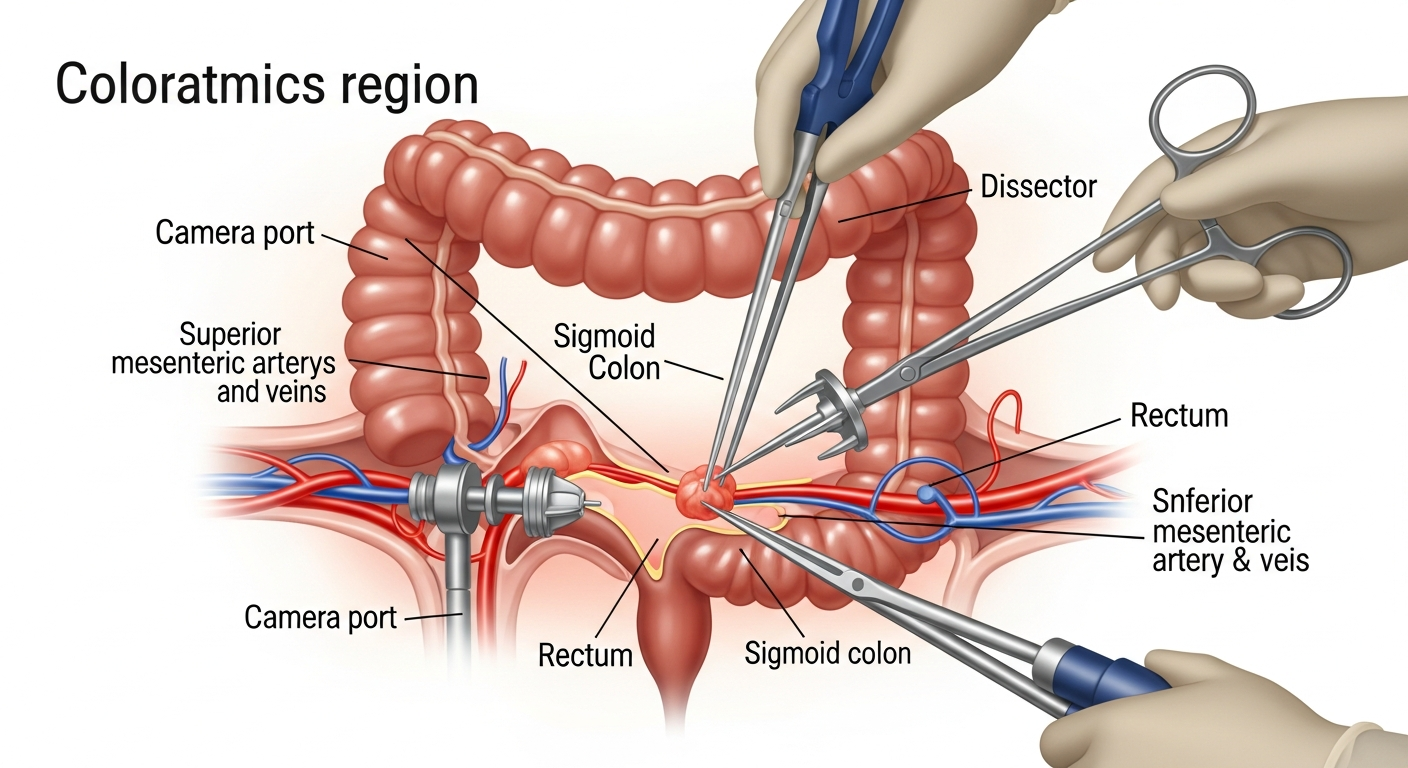
Laparoscopic colectomy removes part or all of the colon through small incisions. It is recommended for colon cancer, complicated diverticular disease, and severe ulcerative colitis when conservative management fails.
What Is Colectomy and When Is It Needed?
The colon is the largest part of the large bowel. Partial or total removal becomes necessary when disease cannot be controlled medically, or when life-threatening complications arise such as perforation.
Common Indications
Advantages of the Laparoscopic Approach
Smaller incisions mean less post-operative pain, faster return of bowel function and daily activity, and a lower risk of future adhesions compared with open surgery.
How Is the Procedure Performed?
Under general anaesthesia, a camera and instruments are inserted through small incisions. The surgeon defines the resection margins and fashions a safe anastomosis to restore bowel continuity. A temporary stoma is created in selected cases.
Recovery and Return to Normal Life
Typical hospital stay: 3–5 days. Gradual return to a normal diet over approximately two weeks. Full recovery estimate: 4–6 weeks, determined by the extent of resection and the patient's condition.
When to Contact Your Surgeon Immediately
After surgery, contact your surgeon at once if:
Frequently Asked Questions
Can a person live after total colectomy?▾
Yes — the body adapts and the small bowel takes over adequate absorptive function, with some dietary adjustments.
Is a permanent stoma always needed after colectomy?▾
No. In many cases the bowel is reconnected directly. A stoma is used when a safe anastomosis is not possible and is usually temporary.
Is laparoscopic colon surgery as safe as open surgery?▾
Outcomes are equivalent in experienced hands, with the added benefit of faster healing and less pain.
How long is the hospital stay after colectomy?▾
Typically 3–5 days for laparoscopic cases, determined by the complexity of the procedure.