Laparoscopic Splenectomy: When Is It Recommended and What Happens Afterwards?
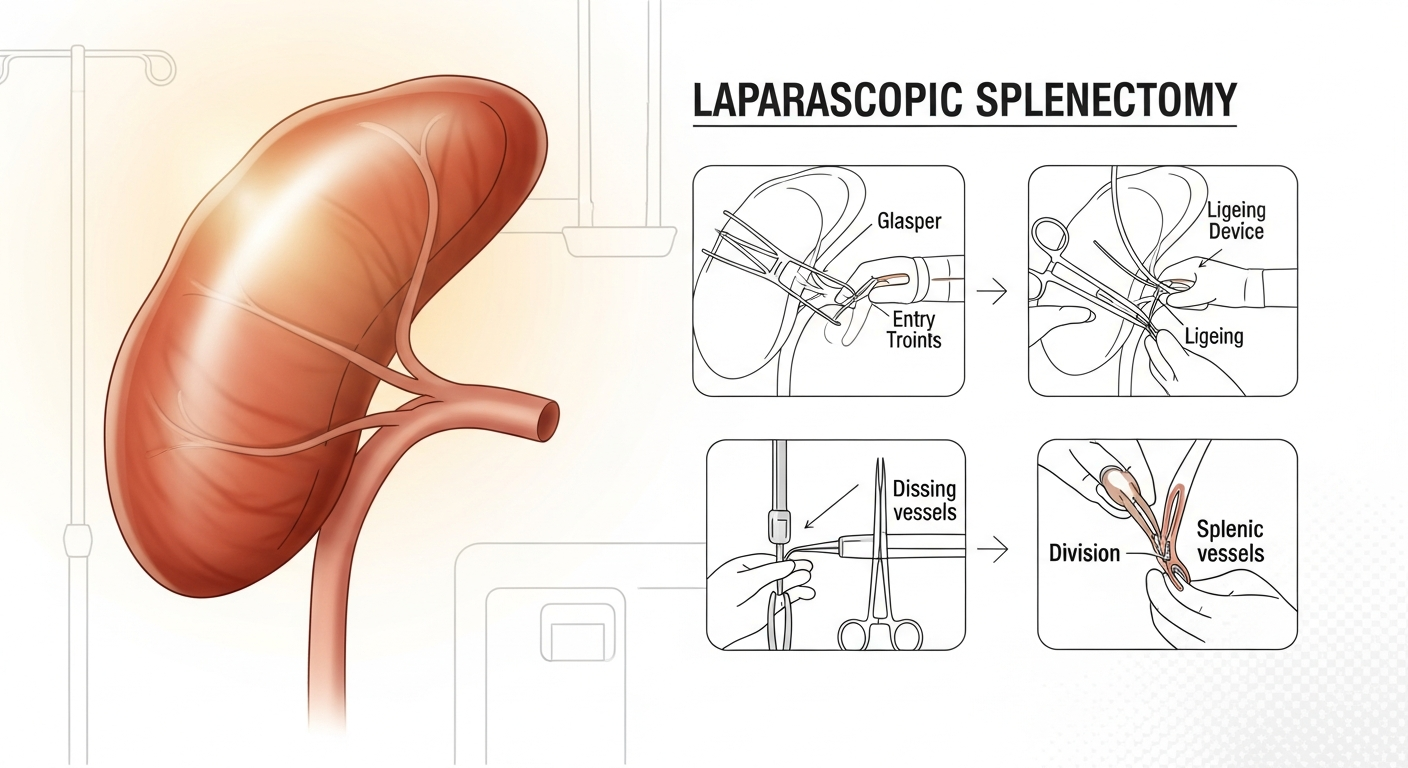
Laparoscopic splenectomy is the optimal choice in selected cases, combining definitive cure of the underlying disease with rapid recovery through small incisions.
What Does the Spleen Do and When Is Removal Needed?
The spleen is an immune organ located under the left rib cage. Removal is required when the spleen itself causes harm — destroying blood cells or platelets — or when it harbours a tumour or becomes critically enlarged.
Main Indications for Splenectomy
How Is the Operation Performed?
Under general anaesthesia a laparoscope is introduced through 3–4 small incisions on the left side. The spleen is carefully freed from its blood supply, then morcellated inside a closed bag and extracted through one of the incisions.
Recovery After Splenectomy
Typical hospital stay: one to two days. Estimated full recovery: two to three weeks, determined by the underlying condition.
Life Without a Spleen
Life after splenectomy is normal with some precautions — patients become more susceptible to certain encapsulated bacterial infections. Preventive vaccinations before surgery and clear medical instructions are essential.
When to Contact Your Surgeon Immediately
After surgery, contact your surgeon at once if:
Frequently Asked Questions
Can you live without a spleen?▾
Yes. The body functions without the spleen with appropriate preventive measures.
Which vaccines are needed before splenectomy?▾
Typically pneumococcal, meningococcal, and Haemophilus influenzae vaccines. The surgeon determines the immunisation protocol.
Does splenectomy permanently cure ITP?▾
In a significant proportion of patients yes, but some cases do not respond. The surgeon assesses the likelihood of response before deciding on surgery.
How long is the hospital stay?▾
One to two days in most uncomplicated laparoscopic cases.