Thyroidectomy: Indications, Types & Life After the Operation
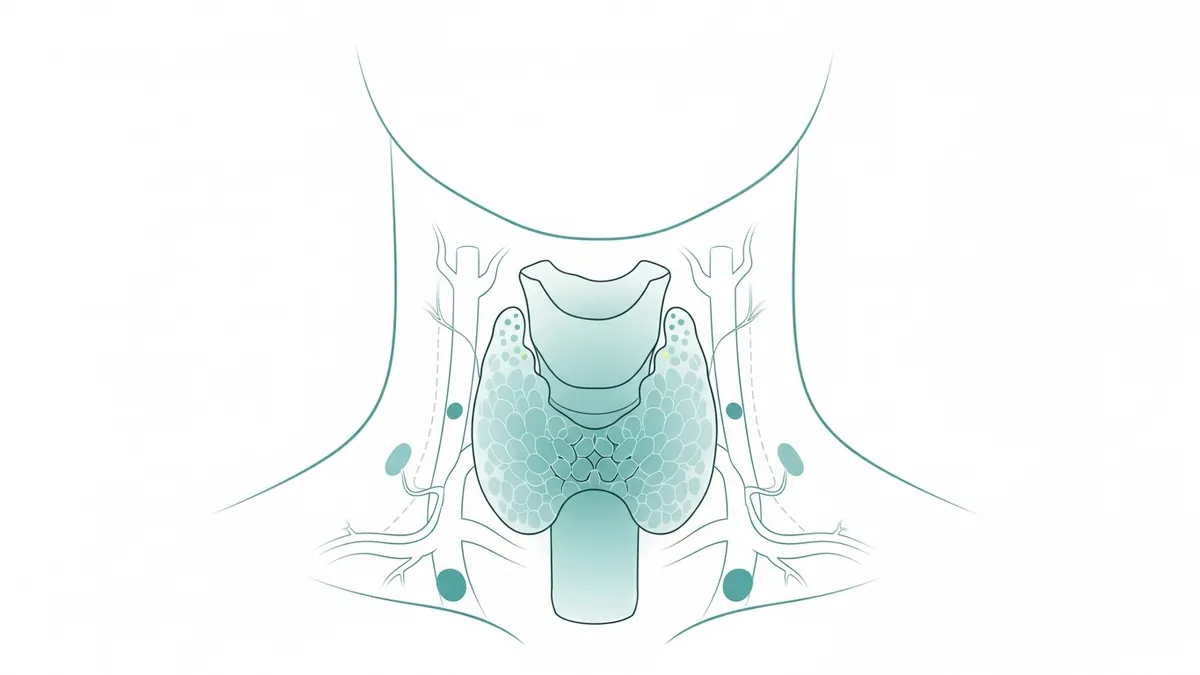
Thyroidectomy is the appropriate treatment for thyroid cancer, certain large nodules, hyperthyroidism not responding to medication, and a compressive goitre. It takes 1–2 hours under general anaesthesia and requires ongoing hormonal follow-up.
What Does the Thyroid Do?
The thyroid gland sits in the neck and produces T3 and T4 hormones that regulate metabolism, heart rate, and energy. Any dysfunction has widespread effects throughout the body.
Indications for Thyroidectomy
Types of Thyroidectomy
Partial thyroidectomy preserves half the gland and some hormonal output. Total thyroidectomy removes the entire gland and requires lifelong hormone replacement. The type is determined by the nature of the condition.
How Is the Operation Performed?
A small incision is made at the base of the neck. The surgeon carefully frees the gland, preserving the recurrent laryngeal nerves and parathyroid glands. Duration: 1–2 hours.
Recovery and Life After Thyroidectomy
Hospital stay: one to two nights. Return to desk work within approximately one week. Those who have total thyroidectomy take thyroxine daily and have levels monitored regularly. Details determined by the individual case.
When to Contact Your Surgeon Immediately
Contact your surgeon at once after surgery if:
Frequently Asked Questions
Does the patient need lifelong medication after thyroidectomy?▾
After total thyroidectomy yes — thyroxine is taken daily. After partial thyroidectomy medication may not be required if the remaining half produces sufficient hormone.
Is thyroid cancer dangerous?▾
Most types (papillary and follicular) are treated with very high success rates when detected early. Surgery is followed by radioiodine as needed.
Does surgery affect the voice?▾
Temporary hoarseness is common. Permanent effects are rare when the operation is performed by a surgeon experienced in recurrent laryngeal nerve anatomy.
Can thyroidectomy be done laparoscopically?▾
The standard approach is a small neck incision. Additional laparoscopic or robotic techniques are available at specialised centres.