Varicose Veins: Causes, When to Treat With Laser & What the Session Involves
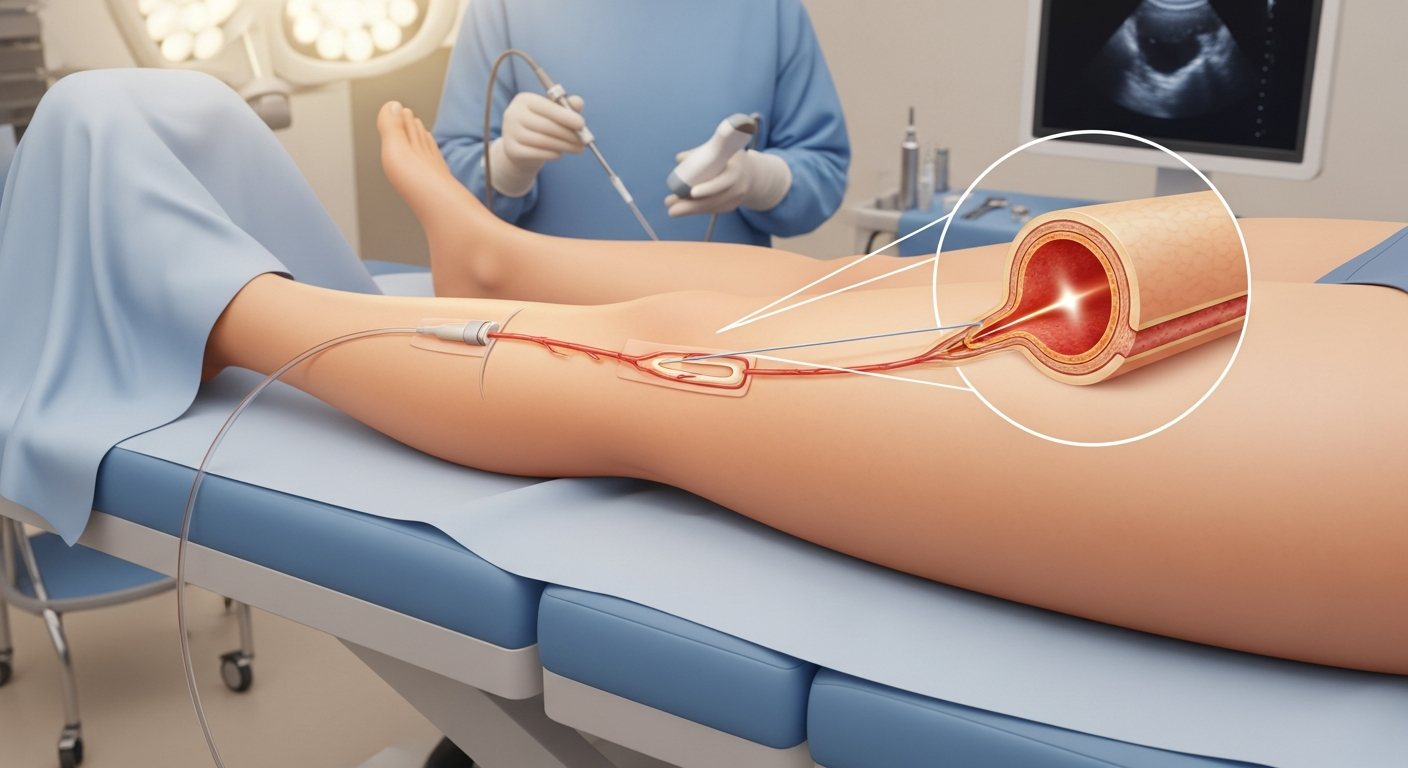
Varicose veins develop when superficial vein valves fail to prevent backflow, causing the veins to enlarge. Endovenous laser ablation (EVLA) treats them without large surgical incisions in most cases.
Why Do Varicose Veins Develop?
Risk factors include family history, prolonged standing, pregnancy, obesity, and prolonged sitting. These weaken vein valves, allowing blood to pool and distend the vessel.
Common Symptoms of Varicose Veins
When Do Varicose Veins Become Dangerous?
Varicose veins are usually troublesome rather than dangerous. However, superficial or deep vein thrombophlebitis, or leg ulcers, require urgent assessment.
How Does Endovenous Laser Ablation (EVLA) Work?
A thin laser catheter is inserted inside the dilated vein under ultrasound guidance. Laser energy is delivered precisely to the vein wall, causing it to seal shut. Blood flow is automatically redirected to healthy veins.
Recovery After the Laser Session
Most patients walk immediately after the session. Compression stockings are worn for approximately two weeks. Return to desk work the following day approximately. Duration determined by the individual case.
When to Contact Your Surgeon Immediately
Seek emergency care if:
Frequently Asked Questions
Is the laser session painful?▾
Local anaesthesia is given. Sensation during the session is minimal. During recovery a slight vibration in the leg is felt for a few days then gradually subsides.
Do varicose veins return after treatment?▾
The treated vein does not return. However, new veins may develop over time depending on risk factors. Compression stockings and physical activity reduce the risk.
Do I need more than one session?▾
Many cases are resolved in one or two sessions. The number depends on how many veins are affected and the degree of enlargement.
Can compression stockings replace laser treatment?▾
Stockings relieve symptoms but do not treat the weak vein. Laser or sclerotherapy permanently closes the vein.