What is a sleeve gastrectomy?
Sleeve gastrectomy is a laparoscopic weight-loss operation in which about 75–80% of the stomach is removed along its outer curve, leaving a narrow tube or “sleeve”.
It works in two ways: the smaller stomach makes you feel full with less food, and levels of the hunger hormone ghrelin — produced mainly in the removed part — fall, so appetite drops noticeably, especially in the first months.
The intestines are not re-routed and no device is left inside the body. The removed part does not grow back, which is why the sleeve is now the most performed bariatric operation worldwide and in the Middle East.
Other names for the same operation
- Gastric sleeve or vertical sleeve gastrectomy (VSG)
- Laparoscopic sleeve gastrectomy (LSG)
- “Qas al-ma‘ida” or “takmeem al-ma‘ida” in Arabic
Why choose Dr. Oways Al-Awaisheh for your sleeve?
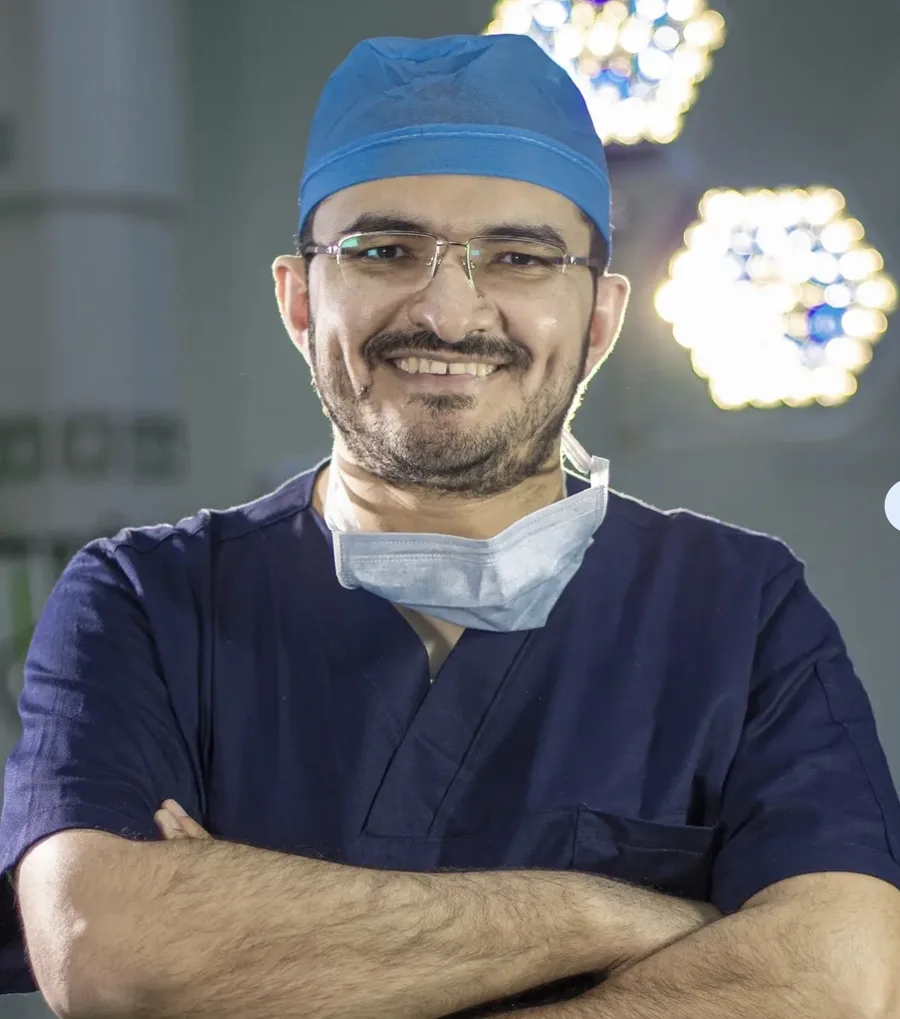
Dr. Oways Al-Awaisheh is a consultant general, laparoscopic, bariatric and oncologic surgeon who operates at the Islamic Hospital in Al-Abdali, Amman, with modern operating theatres and a multidisciplinary team. His approach is safety-first: no operation is booked before a full assessment confirms the sleeve is right for you — or that a bypass, balloon or clip would suit you better.
- British Fellowship in Surgery.
- Specialist diploma in laparoscopic and bariatric surgery from France.
- Jordanian Board of General Surgery; member of the Jordanian Society of Surgeons and the Jordan Medical Association.
- Performs the full range of bariatric procedures — sleeve, bypass, balloon and clip — so you get an unbiased recommendation.
- Clear explanation of benefits, risks and alternatives, plus a written nutrition and follow-up plan.
- WhatsApp coordination before travel for patients from Saudi Arabia, the Gulf, Iraq and Syria, and follow-up after you return home.
Dr. Oways explains weight-loss surgery
Who is a candidate for sleeve gastrectomy?
Not everyone with excess weight needs surgery. Current international guidance (ASMBS & IFSO, 2022) is based on BMI and obesity-related disease; the final decision follows a medical assessment.
BMI of 35 or more
Bariatric surgery is recommended at BMI ≥ 35 regardless of other conditions.
BMI 30–34.9 with metabolic disease
Such as poorly controlled type 2 diabetes, high blood pressure, fatty liver or sleep apnoea.
Non-surgical attempts have failed
When diet, exercise and medication have not achieved or maintained a healthy weight.
Ready to commit
Understanding that surgery is a tool, and committing to the diet, vitamins and regular follow-up.
Calculate your BMI now
When may a sleeve be postponed or not ideal?
- Severe reflux or Barrett's oesophagus — a bypass is often more suitable.
- Unstable heart or lung disease, or inability to tolerate general anaesthesia.
- Current pregnancy or planned pregnancy within the next year.
- Untreated addiction or unstable psychiatric illness.
- Inability to commit to lifelong follow-up and supplements.
Benefits of sleeve gastrectomy
Weight loss is the best-known benefit, but the most important effect is on health: many obesity-related conditions improve as weight falls.
Weight and appetite
- Large loss of excess weight within 12–18 months
- Less hunger thanks to lower ghrelin
- Feeling full sooner with small portions
General health
- Improvement or remission of type 2 diabetes in many patients
- Lower blood pressure and cholesterol
- Better sleep apnoea and fatty liver
- Less knee and back pain
Compared with other operations
- No intestinal re-routing
- Fewer vitamin deficiencies than bypass
- No implanted device
- Can be converted to a bypass later if needed
Preparing for sleeve gastrectomy
Good preparation lowers risk and improves results. Tests are tailored to your age and health after the consultation.
- Comprehensive blood tests (blood count, HbA1c, liver, kidney and thyroid function, vitamins).
- Heart, lung and anaesthetic assessment as needed.
- Upper endoscopy or imaging when indicated, especially with reflux.
- Nutrition assessment, sometimes a two-week low-calorie diet to shrink the liver.
- Stopping smoking well before surgery, as it raises the risk of leaks and chest problems.
- Review of current medicines, especially diabetes, blood-pressure and blood-thinning drugs.
How is a sleeve gastrectomy performed?
The operation usually takes 45–90 minutes and is performed laparoscopically under general anaesthesia.
- 1
General anaesthesia
The anaesthesia team monitors you throughout in a fully equipped theatre.
- 2
Keyhole incisions
The camera and instruments go through small 5–12 mm incisions instead of an open wound.
- 3
Calibration tube
A bougie is passed into the stomach to set the width of the remaining sleeve precisely.
- 4
Removal and stapling
Most of the stomach is divided with surgical staplers, the staple line is sealed and the removed part is taken out.
- 5
Staple-line check
The surgeon checks for bleeding or leaks before finishing.
- 6
Walking the same day
Patients walk within hours and usually go home after 1–2 nights.
Recovery after sleeve gastrectomy
This timeline is approximate and varies with each patient's health and adherence.
Day of surgery
Early walking to prevent clots, sips of water as instructed, pain and nausea control.
Days 1–2
Clear liquids, then discharge once you tolerate drinking.
Week 1
Mild tiredness, port-site or shoulder pain from the gas. Key goal: frequent small sips of fluid.
Weeks 2–3
Most return to desk work; move to full liquids then purées.
Weeks 4–6
Soft then regular food, more walking, no heavy lifting or intense core exercise.
Months 3–12
Fastest weight-loss phase, with regular blood tests and supplement adjustment.
Diet after sleeve gastrectomy
Food is reintroduced in stages while the stomach heals. You receive a detailed written programme after surgery.
| Stage | Approx. timing | Food type | Examples |
|---|---|---|---|
| 1 | Week 1 | Clear liquids | Water, strained broth, herbal tea, diluted sugar-free juice |
| 2 | Weeks 2–3 | Full liquids & protein | Blended soups, low-fat milk or yoghurt, protein shakes |
| 3 | Weeks 3–4 | Puréed food | Mashed egg, smooth hummus, blended vegetables, puréed fish |
| 4 | Weeks 5–6 | Soft food | Tender minced chicken or meat, low-fat cheese, cooked vegetables |
| 5 | After 6–8 weeks | Balanced healthy diet | Small protein-rich meals, chewed well |
Golden rules after a sleeve
- Protein first: roughly 60–80 g a day to protect muscle.
- 1.5–2 litres of fluid daily in sips; don't drink with meals — 30 minutes before or after.
- Chew well and stop at the first sign of fullness.
- Avoid fizzy and sugary drinks and liquid calories.
- Daily lifelong vitamins as advised (multivitamin, B12, iron, calcium and vitamin D).
How much weight will I lose after a sleeve?
Studies show committed patients lose on average about 60–70% of their excess weight within one to two years — roughly 25–30% of total body weight. Approximate figures as a share of total weight:
What determines your result?
- Starting weight, age and sex
- Adherence to protein, fluids and small meals
- Regular physical activity
- Insulin resistance, medicines and hormones
- Attending follow-up and blood tests
Is sleeve gastrectomy dangerous? Risks and complications
Laparoscopic sleeve gastrectomy is a safe operation when performed for the right patient in a well-equipped hospital; modern data put its safety close to common operations such as gallbladder removal. Like any surgery, rare complications exist.
Rare early complications
- Staple-line leak (rare, around 1% or less in experienced centres)
- Bleeding
- Blood clots in the legs or lungs
- Wound infection
- Nausea or vomiting in the first days
Possible later issues
- New or worse reflux in some patients
- Vitamin and mineral deficiency if supplements are neglected
- Temporary hair loss between months 3 and 6
- Gallstones with rapid weight loss
- Partial weight regain if old habits return
Contact the surgeon immediately if after surgery you have:
- Fever above 38 °C or chills
- Severe abdominal, left-shoulder or chest pain
- Fast heart rate or shortness of breath
- Persistent vomiting or inability to drink
- Vomiting blood or black stools
- Pain and swelling in a leg
Sleeve vs bypass vs balloon vs clip vs weight-loss injections
No single option suits everyone. This simplified comparison helps you ask the right questions at your consultation:
| Option | How it works | Expected weight loss | Often suits |
|---|---|---|---|
| Sleeve gastrectomy | Removes 75–80% of the stomach + lowers hunger hormone | ≈ 25–30% of total weight | BMI ≥ 35, or 30+ with disease, without severe reflux |
| Gastric bypass (mini or Roux-en-Y) | Smaller stomach + bypasses part of the intestine | ≈ 30–35% | Complex diabetes, severe reflux, higher BMI |
| Gastric balloon | Temporary balloon in the stomach for several months | ≈ 10–15% | Milder obesity or as a step before surgery |
| Gastric clip | Folds part of the stomach without removal | Moderate, less than a sleeve | Those preferring no removal |
| GLP-1 injections | Continuous medication that reduces appetite | ≈ 15–20% while used | Those who prefer to avoid or are unfit for surgery |
Read the full comparison in our guide to choosing a bariatric procedure; the final decision is made with your surgeon after assessment. Learn more
Cost of sleeve gastrectomy in Jordan: what affects the price?
The price varies with several factors, so after your consultation you receive a clear written quote showing exactly what is included before any financial commitment — no hidden costs.
- Room category and length of hospital stay
- Pre-operative tests needed for your case
- Number and type of surgical staplers
- Associated conditions needing extra preparation or monitoring
- Additional procedures in the same operation (e.g. hiatal hernia repair if needed)
Always ask before booking: what does the price include?
- Surgeon and anaesthesia fees
- Hospital stay
- Staplers and consumables
- Discharge medication
- Follow-up visits and nutrition programme
Clinic consultation fee: 15 JOD (procedures not included). Most insurers do not cover bariatric surgery, but you can check your cover on our insurance page. Learn more
WhatsApp consultationSleeve gastrectomy in Jordan for patients from Saudi Arabia, the Gulf, Iraq and Syria
Dr. Oways welcomes patients from abroad, particularly northern Saudi Arabia (Tabuk, Al-Jawf, Al-Qurayyat, Arar, Hail), Riyadh, Jeddah and Dammam, as well as Iraq and Syria. The aim: everything arranged before you arrive, and contact maintained after you leave.
1. Message us on WhatsApp
Send your age, weight, height, conditions, medicines and any previous tests or reports.
2. Pre-travel review
An initial review clarifying the likely procedure, approximate cost and tests.
3. Arrive in Amman
Tests and consultation at the Islamic Hospital, with surgery usually within a few days.
4. Stay before flying
Staying in Amman for about a week after surgery is usually advised before travelling home.
5. Follow-up from home
Ongoing WhatsApp contact for diet stages, supplements and any medical question.
Life after a sleeve: exercise, hair and pregnancy
Exercise
Walk from day one, light exercise after the first weeks, then resistance training once cleared to protect muscle.
Hair loss
Common and usually temporary between months 3 and 6; reduced by adequate protein and supplements.
Loose skin
Depends on age, genetics and amount lost; significant excess skin can be assessed once weight is stable.
Pregnancy
Delay pregnancy for 12–18 months after surgery until weight and vitamins stabilise, with joint follow-up.
Social occasions
Small plate, protein first, eat slowly. Surgery changes how you eat, not whether you socialise.
Keeping the result
Causes of regain: grazing between meals, liquid calories, poor sleep and missed follow-up.
How to choose a sleeve surgeon in Jordan
Rather than searching only for “the best sleeve surgeon in Jordan”, check these points before booking:
- Clear, verifiable training in laparoscopic and bariatric surgery.
- A well-known, equipped hospital named clearly before booking.
- A full assessment before approval, not a direct operation booking.
- Risks explained as clearly as results.
- Experience in several bariatric operations for an unbiased recommendation.
- A written diet and follow-up plan after surgery.
- Easy access to the surgeon afterwards, especially if you live abroad.
Sleeve gastrectomy in Jordan — FAQs
Scientific references
International medical guidance used in preparing this educational guide: