Magnetic Bariatric Surgery in Jordan
A modern technique where two magnets join the intestine to itself — no staples, no sutures at the connection. Used with, or after, a sleeve gastrectomy, and performed by Dr. Owais Al-Awaysheh at the Islamic Hospital in Amman for patients from Jordan, Saudi Arabia, Iraq and the Gulf.
Price5,000JOD≈ 26,450 SAR- Consultant laparoscopic & bariatric surgeon
- UK fellowship + French bariatric diploma
- Islamic Hospital – Abdali
- Full coordination for international patients
The idea in 40 seconds: one magnet in the duodenum, one in the small bowel — they meet and create the connection.
The short answer
Magnetic surgery for obesity (Magnetic Duodeno-Ileal Anastomosis, MagDI) is a metabolic procedure in which one magnet is delivered to the duodenum and a second is positioned laparoscopically in the small intestine. The magnets attract, compress the tissue between them and, over several weeks, create a fused opening; then they pass naturally. The result is a partial bypass of food without staples or sutures at the connection — usually combined with, or added after, a sleeve gastrectomy.
- Approach
- Laparoscopic + two magnets
- Operating time
- About 1–2 hours
- Hospital stay
- Usually 1–2 nights
- Stay in Amman (travellers)
- About 7–10 days
- Magnets
- Pass naturally within weeks
- Hospital
- Islamic Hospital, Amman
- Regulatory
- US FDA authorization in 2024
- Price
- 5,000 JOD (≈ 26,450 SAR)
Magnetic surgery price
Price
5,000JOD
Equivalent to approx.26,450SAR
surgical package
One clear price for patients in Jordan, known before you leave home — no surprises on the day.
Book your assessment and get the written quoteWhy this price is real value
One operation, more than one benefit
Weight loss plus a metabolic effect that improves diabetes and lipids for many patients — which can reduce long-term medication costs.
Modern technology, accessible price
Magnetic surgery is among the newest bariatric techniques worldwide, offered here at a defined price.
A specialist in every bariatric option
UK fellowship and French bariatric diploma — not a one-size-fits-all operation.
A reputable hospital
Islamic Hospital, Abdali, with full anaesthesia and critical-care support.
Follow-up after you return
WhatsApp follow-up until the magnets pass, plus a written nutrition plan.
No hidden costs
A written quote of what is included before any commitment.
What the package includes
- Surgeon and anaesthesia fees
- Magnetic system and surgical devices
- Hospital stay as planned
- Post-operative follow-up and nutrition plan
The price is confirmed in a written quote after the initial assessment; extra tests or procedures are added only if your case requires them, and only after you are informed. The SAR figure is an approximate fixed-rate equivalent. Clinic consultation: 15 JOD.
Your medical journey from Saudi Arabia, Iraq and the Gulf
Jordan is close, and its hospitals have been a regional medical reference for decades. Our aim: you arrive with everything arranged.
- 1
Before travel — WhatsApp assessment
Send age, weight, height, conditions, medications and reports. Receive an initial opinion, plan and written cost estimate.
- 2
Day 1 — Arrival in Amman
In-person consultation and tests at the Islamic Hospital.
- 3
Days 2–3 — Surgery
Surgery once assessment is complete, with 1–2 nights in hospital.
- 4
Days 4–10 — Recovery in Amman
A review before flying, confirming you tolerate fluids and walk normally.
- 5
Back home — remote follow-up
Diet stages, supplements, and an X-ray at home to confirm the magnets passed.
- We help with scheduling and coordination. Please check Jordan's entry requirements for your nationality before booking.
Why have magnetic surgery with Dr. Owais Al-Awaysheh?
Choosing the surgeon matters more than choosing the technique:
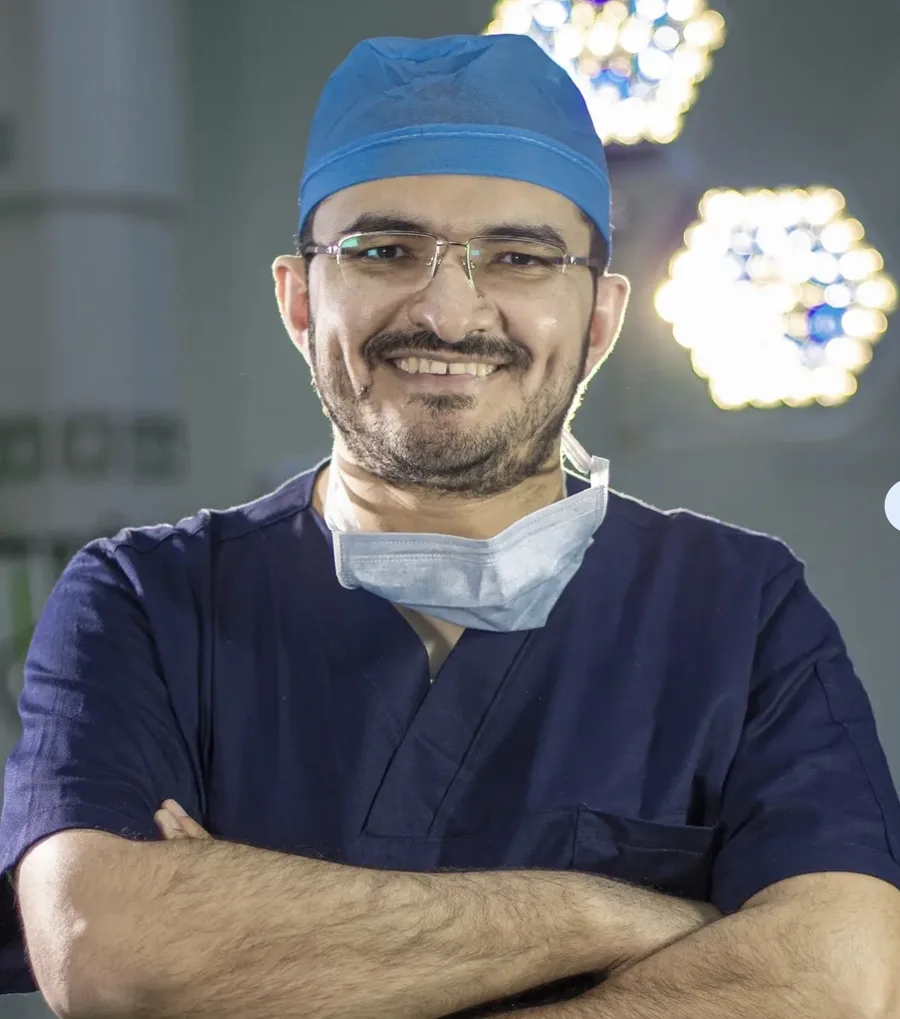
Dr. Owais Al-Awaysheh
Consultant General, Laparoscopic, Bariatric & Oncologic Surgeon
Islamic Hospital – Abdali, Amman
About the doctorInternational bariatric training
Consultant general, laparoscopic and bariatric surgeon with a UK surgical fellowship, a French diploma in laparoscopic & bariatric surgery, and the Jordanian Board.
Performs every bariatric option
Sleeve, all bypass types, balloon, gastric clip and magnetic surgery — so you get an unbiased recommendation.
Hands-on with the new technique
Performs magnetic procedures, including revisions after sleeve, as shown in the video.
A well-equipped, reputable hospital
Surgery at the Islamic Hospital, Abdali, Amman, with full anaesthesia and critical-care support.
Honesty before the decision
Benefits, risks and alternatives explained equally clearly, with a written cost breakdown before any commitment.
Follow-up that continues at home
A written nutrition plan and WhatsApp follow-up after you return, until the magnets pass and beyond.
Book your appointment
Pick a time from the clinic's live schedule, or message us on WhatsApp if you are outside Jordan.
Regained weight after a sleeve? Here is what can be done
Some weight regain years after a sleeve is common — from pouch dilation, old habits or metabolic factors. It does not always mean another operation; sometimes nutrition changes or medication are enough.
When surgery is right, a sleeve can be converted to a bypass. The magnetic technique creates that bowel connection without staples — as in the case shown in the video above.
Your consultation starts by finding the cause of the regain, then explains every option: magnetic surgery, mini or classic bypass, re-sleeve, or non-surgical treatment.
Full medical details
How is magnetic surgery done? Step by step
Performed under general anaesthesia; final details depend on your case and whether a sleeve is done at the same time.
- 1
Assessment
Blood tests, anaesthesia review, and endoscopy or imaging if needed, plus a review of your medications.
- 2
Sleeve (if needed)
If you have not had a sleeve before, a laparoscopic sleeve gastrectomy is usually done in the same session.
- 3
First magnet
A magnet is passed through the mouth into the duodenum using a dedicated delivery system.
- 4
Second magnet
A second magnet is guided laparoscopically to a precisely measured point in the small intestine.
- 5
Magnets meet
The magnets self-align through the bowel wall and the surgeon confirms the position.
- 6
Connection forms
Over several weeks the tissue between the magnets fuses into an opening; the magnets then detach and pass naturally.
What does “no cutting, no stapling, no sutures” mean?
- No surgical staples are used to create the bowel connection.
- No sutures at the connection itself.
- Nothing stays inside once the connection has formed.
- To be precise: if a sleeve is done in the same operation, it is performed the standard way with staples — “staple-free” refers to the bowel connection.
Who is it for?
The final decision follows a consultation and tests. These are the situations where it is most often discussed:
Weight regain after sleeve
A revision option that adds a metabolic effect to an existing sleeve.
Obesity with type 2 diabetes
Diverting part of the food stream often improves glucose control more than a sleeve alone.
High BMI
BMI ≥ 35, or 30–34.9 with obesity-related disease, per ASMBS/IFSO guidance.
Patients wanting a stronger effect than a sleeve
After weighing the benefits against lifelong supplements and closer follow-up.
When it may not be the best option
- Severe uncontrolled reflux (a classic bypass may suit better).
- Dense adhesions or previous inflammatory bowel disease.
- An implanted device affected by magnets, without specialist clearance.
- Inability to commit to vitamins and regular blood tests.
- Current or near-term planned pregnancy.
Magnetic surgery vs sleeve vs gastric bypass
A simplified comparison to help you ask the right questions:
| Sleeve | Gastric bypass | Magnetic surgery | |
|---|---|---|---|
| Concept | Smaller stomach | Smaller stomach + bowel bypass | Sleeve + magnetic bowel connection |
| How the connection is made | No connection | Staples and sutures | Two magnets, no staples |
| Effect on diabetes | Good | Strong | Often strong (encouraging early data) |
| Suitable after a sleeve | — | Yes | Yes |
| Supplements | Lifelong | Lifelong, closer monitoring | Lifelong, closer monitoring |
| Maturity | Long-established | Established for decades | New — long-term data still accumulating |
Benefits — and honest limits
- Bowel connection without staples or sutures.
- Laparoscopic, small incisions.
- Metabolic benefit for diabetes and lipids besides weight loss.
- A practical option for weight regain after a sleeve.
- Magnets pass naturally — no foreign body left.
- New technique: early results are encouraging, long-term data is limited.
- Not for everyone; careful assessment is essential.
- Lifelong vitamins and regular blood tests.
- No MRI until the magnets are confirmed to have passed.
- Bowel habits may change (looser or more frequent) early on.
After surgery
Day 1
Walking within hours, sips of fluid as instructed, pain control.
Week 1
Clear then full liquids; discharge usually after 1–2 nights.
Weeks 2–6
Puréed then soft foods while the connection forms and the magnets pass.
Confirming the magnets passed
Usually a simple X-ray you can do at home and send via WhatsApp.
Following months
Gradual weight loss, regular labs and supplement adjustments.
Contact the doctor immediately if you notice:
- Severe or persistent abdominal pain, or bloating without passing gas.
- Repeated vomiting or inability to drink.
- Fever above 38 °C or a racing pulse.
- Blood in vomit or stool, or black stool.
Magnetic bariatric surgery — FAQ
Scientific references
- SAGES TAVAC — MagDI™ System by GT Metabolic™ (Technology & Value Assessment, 2025)
- Gagner M. et al. — First-in-human magnetic duodeno-ileal anastomosis with sleeve gastrectomy. Obes Surg 2023;33(8):2282-2292
- Gagner M. et al. — Early outcomes of magnetic duodeno-ileal anastomosis with prior or concurrent sleeve gastrectomy. Surg Obes Relat Dis 2023
- ASMBS / IFSO 2022 — Indications for Metabolic and Bariatric Surgery
Your first step: a no-obligation assessment
Send your details on WhatsApp; Dr. Owais's team will review them and tell you whether magnetic surgery suits you or another option is better.
This page is for health education and does not replace medical consultation. Results vary between patients.
Last medically reviewed: 15 November 2026